Memory Foam vs Latex: How to Choose the Right Mattress Material for Your Sleep
A durable guide to two of the most common mattress materials, exploring how contour, responsiveness, temperature, and durability shape the sleep experience. Built for readers seeking clarity without product promotion, rooted in sleep science and practical guidance.
Published September 30, 2026
Two materials dominate the modern mattress landscape: memory foam and natural latex. Each has a distinctive fingerprint on sleep—the way a surface cradles the body, manages heat, and endures over years of use. This article unfolds the similarities and differences between memory foam and latex, translating technical terms into practical guidance for people at different life stages and with varied sleep preferences.
What matters most in mattress materials
When evaluating memory foam and latex, several core factors consistently shape the sleep experience:
- Contour and pressure relief: How the material conforms to curves and redistributes pressure points.
- Responsiveness and bounce: How quickly the surface returns to its initial shape after movement, affecting ease of turning or getting in and out of bed.
- Temperature management: The ability of the material to regulate heat and moisture, influencing comfort across seasons.
- Durability and shape retention: How well the mattress holds its feel over years of use, including resilience against sagging.
Understanding these factors helps readers match a material to their body weight, sleeping position, and personal comfort threshold. It is also essential to consider layering, cover materials, and construction, because the same base material can perform differently when paired with breathable covers or added toppers.
Memory Foam: contouring comfort and motion isolation
Memory foam, often formulated as viscoelastic polyfoam, responds to heat and pressure to create a contouring sleep surface. Its hallmark is “hug”—the way the foam embraces contact points and dissipates motion. For sleepers who share a bed or experience restlessness, memory foam’s motion isolation can be a meaningful benefit. Yet the degree of contouring varies widely depending on the foam density, layer thickness, and overall mattress design.
Key characteristics to understand memory foam include:
- Contour and pressure relief: Higher-density memory foams generally offer deeper contouring and sustained pressure relief, which can be advantageous for sleepers with shoulder or hip discomfort.
- Response time: Memory foam typically moves more slowly than latex. This slow recovery can feel enveloping to some and confining to others, especially for people who prefer a more buoyant surface.
- Temperature behavior: Traditional memory foam can trap heat because of its structure. Modern memory foams often incorporate gel infusions, open-cell designs, or phase-change technologies to improve breathability, but performance varies by product.
- Durability: Good memory foam maintains its feel for many years, with a caveat: excessive sagging beneath the hips or lower back may occur if the supportive base fails or if the foam is too soft for a given body weight.
From a health perspective, memory foam can support spinal alignment for side sleepers when the contour closely mirrors natural curves. For back sleepers and those who maintain a neutral spine, memory foam’s ability to distribute weight evenly can contribute to reduced pressure on points such as the shoulders and hips. The caveat is personal preference: some sleepers report a reduction in the sense of “airiness” that accompanies firmer or more breathable materials.
Natural latex: buoyancy, breathability, and resilience
Natural latex—whether Dunlop or Talalay—offers a different pathway to comfort. It tends to be more buoyant, providing a springier feel that supports movement while maintaining a comfortable contour. Latex is also renowned for its temperature-regulating properties and inherent durability. The structure of latex, with its closed-cell feel and elasticity, can create a perception of cooler sleep surface compared with traditional memory foam.
Important attributes of latex include:
- Responsiveness: Latex springs back quickly after pressure, giving a lighter, more buoyant sensation that some describe as “airy.”
- Temperature management: Naturally breathable due to its cellular structure, latex often remains cooler than memory foam, particularly when paired with breathable covers and proper airflow under the mattress.
- Durability: Latex tends to resist sagging over time, preserving support and edge integrity with robust longevity when sourced from reputable suppliers.
- Allergen considerations: For sensitive sleepers, natural latex is generally free of flame retardants and many additives common in some synthetic foams, though latex allergies are a consideration for a subset of users.
Latex mattresses can deliver a sense of structured support while still adapting to sleeping positions. The level of contour is typically less pronounced than memory foam, which some sleepers find preferable for maintaining spinal alignment without the “hug” that characterizes many memory foam surfaces.
Temperature regulation: a central consideration
Temperature regulation is a frequent topic in mattress research because sleep quality is closely tied to body heat. Memory foam can trap heat if not designed with adequate breathability, although many modern formulations integrate open-cell structures, gel layers, or phase-change materials to improve thermal performance. Latex, especially when sourced from natural rubber and paired with breathable covers, often maintains a cooler sleep surface by design.
Readers should assess how a bed’s layering interacts with their unique physiology. For example, a memory foam core with a high-density contour might feel excellent for pressure relief but could require a breathable top layer or a cooling mattress protector to mitigate warmth in warmer climates or for sleepers who run hot at night. Conversely, a latex-dominant system benefits from air channels, moisture management, and fabrics that promote airflow around the body, particularly for those who generate more heat during sleep.
Support, spinal alignment, and body weight
Support is not a single attribute but a balance among surface feel, core firmness, and the way a mattress conforms to the curves of the body. Memory foam’s deep contouring can provide excellent shoulder and hip support for side sleepers, helping align the spine if chosen with appropriate thickness and density. Latex offers a more buoyant support that can help maintain spinal alignment for back sleepers with a slightly different feel of firmness and contour.
Body weight plays a significant role in how a material performs. Lighter sleepers may experience pronounced contour from memory foam even with medium firmness, while heavier sleepers may perceive less compression and more pronounced support with latex. In practice, the ideal combination may involve a measured layering approach—an upper comfort layer that suits personal preference, with a supportive core designed to minimize sagging and promote alignment over years of use.
Durability and long-term value
Durability is a practical consideration that translates into long-term value. Memory foam tends to retain its feel over many years, but its performance hinges on density and construction. Higher-density foams generally offer greater durability and slower breakdown but can be heavier and more expensive. Latex, especially natural latex, is celebrated for longevity and resistance to sagging, with many users reporting decades of service, particularly when the mattress is well-constructed and supported by a solid foundation.
Readers should weigh the total cost of ownership, including potential topper investments, the quality of the cover materials, and the mattress foundation. A mattress is a long-term purchase, and a well-chosen combination of core material and upper comfort layers can reduce the need for early replacement while preserving comfort and alignment.
Allergies, health, and environmental considerations
For sleepers with environmental concerns or sensitivities, latex and certain memory foam formulations have different implications. Natural latex, when derived from responsible producers, can reduce exposure to certain synthetic additives. Memory foam compositions vary by brand and product line; some use plant-based polyols or alternative chemistries designed to reduce off-gassing and environmental impact. If allergy considerations are prominent, readers should review product certifications, such as Oeko-Tex or other independent standards, and verify the presence or absence of additives that may affect sensitive individuals.
The domain of sleep health increasingly embraces sustainability alongside comfort. Readers are encouraged to seek transparent material disclosures, third-party certifications, and clearly stated sleep performance expectations. A thoughtful approach considers not only the immediate sensation upon lying down but also how the material fits into a broader sleep wellness plan, including room temperature, bedding, and routine.
Practical guidance: how to choose between memory foam and latex
Bottom line, for readers seeking actionable steps, this criterion-based approach can help clarify the decision process without promoting specific products:
- Identify your primary sleep concern: motion isolation, pressure relief, or ease of movement. If you share a bed and are easily disturbed by partner movement, memory foam’s motion isolation can be advantageous. If you value a buoyant feel with faster response, latex might be preferable.
- Consider your sleeping position and weight: side sleepers who benefit from targeted contour may lean toward memory foam, while back or stomach sleepers who favor a supportive, less enveloping surface may prefer latex.
- Assess temperature tendencies: if you sleep hot, look for latex-rich constructions or memory foam with explicit cooling features and breathable covers.
- Evaluate durability and warranty: longer-lasting materials may justify higher upfront costs, especially when paired with a solid foundation.
- Read material disclosures: density (for memory foam) and latex type (Dunlop vs. Talalay) influence feel and resilience. Certifications can guide safety and environmental considerations.
Ultimately, the best choice is the one that aligns with your body, your sleep environment, and your expectations for long-term comfort. For many readers, a purpose-built approach—selecting a comfortable top layer with a durable core—delivers a reliable balance of contour, support, and breathability.
Cornerstone considerations and a shared framework
In sleep research, the convergence of material science, anatomy, and behavioral health yields a practical framework for mattress evaluation. The memory foam vs. latex debate is not merely about feel; it is about how a surface interacts with the brain’s thermoregulation, the body’s muscular system, and the quality of sleep architecture over the course of a night. A well-chosen mattress supports restorative sleep by maintaining spinal alignment, improving comfort at pressure points, and reducing awakenings caused by discomfort or overheating.
Readers should approach this decision with a mindset that blends subjective comfort with objective indicators. Whenever possible, seek out opportunities to test a mattress in a realistic home setting, assess how the material responds to your daily movements, and consider a trial period or return policy that allows you to experience the surface across multiple seasons and sleep cycles.
A concise glossary that anchors understanding
To ground readers in the terminology used throughout this guide, here is a concise glossary of terms often encountered in memory foam vs latex discussions:
- Contour: The degree to which a material conforms to body shapes in response to pressure and heat.
- Density: The mass per unit volume of foam, influencing support, durability, and feel.
- Buoyancy: The sensation of springiness or resilience that helps the sleeper feel less “stuck” in the surface.
- Open-cell structure: A cellular arrangement in foam that enhances breathability and airflow.
- Talalay vs Dunlop: Two different latex processing methods that influence firmness distribution and feel.
- Phase-change materials: Substances incorporated to absorb, store, and release heat to regulate surface temperature.
Connection to the marked mattress concept
The concept of a marked mattress—whether interpreted as a distinct, highlighted, or certified product—can serve as a metaphor for the clarity this guide aims to provide. In the broader sleep science landscape, choosing between memory foam and latex should be grounded in robust information, transparent disclosures, and a careful weighing of personal needs. The goal is to help readers recognize the surface that stands out for them, not because it is loudly marketed, but because it aligns with sleep health, comfort, and longevity.
Product note: a real-world example relevant to this discussion
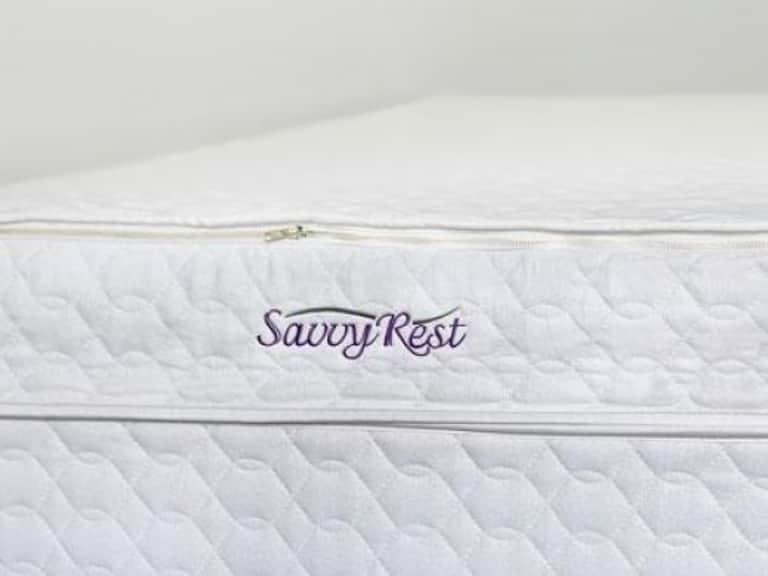
Among available representations of latex mattresses, the Savvy Rest Tranquility Latex Mattress offers a case study in material approach and customization. It uses two layers of natural latex with potential Dunlop or Talalay options, wrapped in organic cotton, and designed for durability and adjustable configurations. While not a product endorsement, examining real-world constructions helps illuminate how latex-based systems are assembled and how users might respond to different layer choices. When considering any mattress product, readers should assess layer composition, cover materials, and warranty terms as part of a comprehensive evaluation.
In this article, the focus remains on material characteristics and sleep outcomes rather than product promotion. The goal is to empower readers with the framework to discern when a memory foam layer or a latex layer best serves their sleep health, with an eye toward durable performance and informed decision-making.
Conclusion: a practical path to better sleep choices
Choosing between memory foam and latex is less about choosing one “better” material and more about identifying the surface that aligns with your body, your sleep environment, and your long-term goals for comfort. Memory foam may excel in contouring and motion isolation for certain sleepers, while latex offers buoyant support and breathability that can promote a cooler night’s rest. Both materials can deliver high-quality sleep when integrated into well-constructed systems—each with thoughtful layering, quality covers, and a stable foundation.
Readers are encouraged to approach mattress selection as a science-informed decision grounded in personal experience. The informational framework presented here aims to replace guesswork with understanding: a measured assessment of contour, response, temperature management, and durability, applied in the context of individual sleep patterns and health considerations.